
From Hopscotch to Hospital: How a TB Outreach Saved 12-Year-Old Maryam's Life in Rural Katsina.
In the quiet rural community of Turji in Bindawa LGA, a 12-year-old by name Maryam Dadda’u was known for her bright smile and endless energy. She loved playing hopscotch (widely known as ‘yar gala-gala in Hausa language), tic-tac-toe, and jumping rope with her friends. Her laughter filled the neighborhood. But in mid-February 2025, her life began to dwindle. Maryam started to have a severe cough that wouldn’t go away. She also felt very tired, lost her appetite, and lost a lot of weight. She couldn’t go outside or play her favorite games anymore. Unaware of the signs and symptoms of tuberculosis (TB), her worried parents turned to traditional herbs and home remedies. Unfortunately, this did not help. As weeks went by, Maryam’s condition worsened. She had trouble eating, walking, and was too weak to speak. However, her turning point came during a TB awareness outreach in Turji, led by the TB LON 1 & 2 project team. While educating the community and screening for symptoms, the team encountered Maryam and suspected she might have TB. Because she was too weak to produce a sputum sample, they promptly referred her to the cough officer at Turai Yar’adua Child and Maternal Hospital in Katsina for further evaluation. |
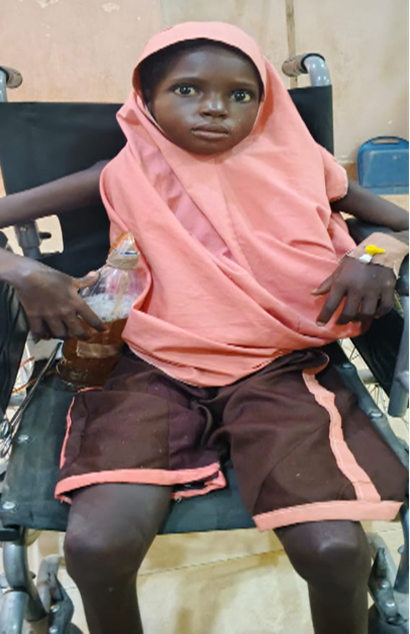
At the hospital, Maryam went through both clinical and bacteriological tests, and by early April 2025, she was diagnosed with TB. She quickly started anti-TB treatment, with follow-up and regular support from the team. Now, she has completed the first phase of her treatment and has started the last phase. Her recovery is remarkable. She can now eat and speak, and recently, she walked five steps on her own for the first time in months. “We thought we had lost her,” her mother shared with emotion. “But now she smiles again. We didn’t know what TB was, but now we know, and we got help.”
Maryam’s story highlights the impact of team effort in active case finding, quick diagnosis, and access to free TB care, especially for vulnerable children in hard-to-reach areas.