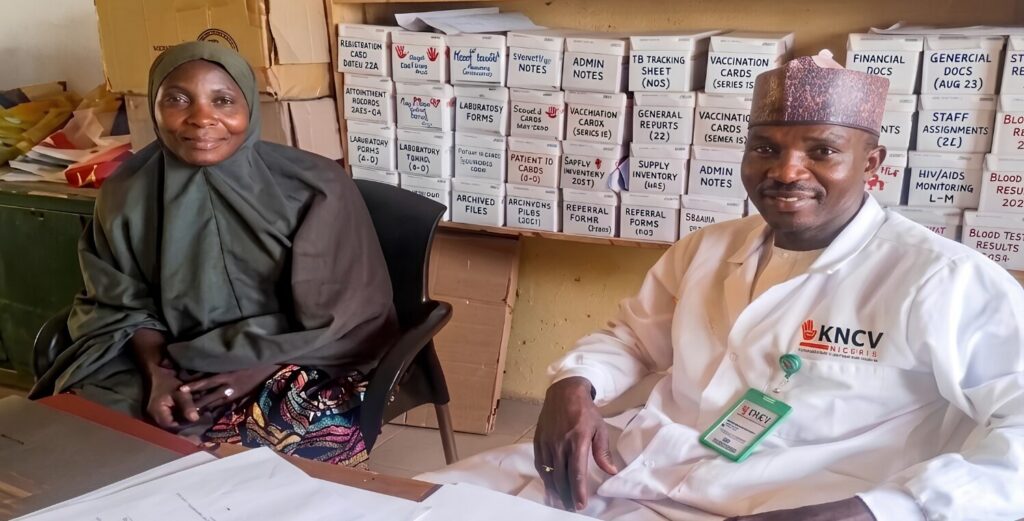
Beyond the whispers: How community care saved Hassana
Early in 2025, the life of 29-year-old Hassana took a painful turn. A full-time housewife living with her husband on the outskirts of Abuja, Hassana suddenly developed a persistent high fever. Initially, she believed it was just a common infection that would soon pass. In search of treatment, she visited nearby hospitals several times. Despite repeated consultations, her condition failed to improve; she was continually prescribed the same ineffective medications. As the months passed, classic symptoms of Tuberculosis (TB) emerged: weakness, severe weight loss, chronic illness, and constant exhaustion. Frustrated by the lack of progress, Hassana turned to a local pharmacy for over-the-counter medications, desperate for relief. Instead, weeks led into months, and her health continued to rapidly deteriorate.
Unfortunately, many people in her immediate circle had little understanding of TB. Neighbors began whispering that Hassana had been cursed or spiritually attacked by people from her village. These misconceptions created deep fear within the family. Overwhelmed by the stigma and seeking traditional remedies, her husband eventually decided to send her back to her home Katsina. By the time she arrived in the Sabon Gari community in Ingawa LGA, Hassana was reduced to skin and bones and was too weak to stand. Her loved ones remained confused about the true cause of her illness, clinging to superstition rather than recognizing a treatable disease. As her health worsened, hope began to fade.
Everything changed in late January 2026. A community outreach team arrived in a nearby village to conduct TB screening and awareness activities. Because she was so weak, Hassana couldn’t attend. However, a relative who attended the session immediately recognized that Hassana’s symptoms perfectly matched the ones described by the health workers. The relative rushed home to get Hassana, but by the time they returned, the outreach team had already departed. Seeing the family’s intense distress, the community head intervened and contacted the Community Health Worker (CHW) by phone. The team immediately directed them to General Hospital Ingawa, where a specialized team supported by KNCV Nigeria was stationed.
At the facility, Hassana was screened with chest X-ray and thereafter provided sputum sample for TB LAMP testing. Both confirmed she had Tuberculosis. Following her diagnosis, she was immediately linked to treatment and care. Backed by proper counseling, nutritional support, and strict adherence to her medications, Hassana began to regain her strength. Today, Hassana has successfully completed the intensive phase of her treatment and is currently two months into her continuation phase. Her health has improved tremendously, she has regained her weight, and hope has returned to her life. She is now eagerly looking forward to completing her full six-month treatment regimen and safely reuniting with her husband in Abuja.
Hassana’s journey highlights the impact of delayed diagnosis, misinformation, and stigma surrounding TB in underserved communities. At the same time, it stands as a triumphant example of why community awareness, early screening, and accessible, quality care matter. Her recovery is a powerful reminder that Tuberculosis is curable, and that community-based interventions are vital to restoring health, dignity, and hope to families.