Reclaiming His Steps: Imrana’s Journey From Bedridden To Independence
In the Sabon Gari community of Ingawa Local Government Area, Katsina State, 25-year-old Imrana Abubakar was known as a determined young businessman. His small communication center where he charged phones, repaired devices, and sold airtime and accessories was a vital hub for his neighbors. Dedicated to his work, Imrana rarely let anything slow him down.
However, about a year ago, that began to change. Imrana developed severe headaches and a persistent, burning fever. Assuming it was a minor bug, he bought over-the-counter medication from a local pharmacy and tried to push through his daily routine.
But the symptoms didn’t fade; they worsened. Despite his declining health, Imrana continued to self-medicate, hoping the illness would eventually run its course. Instead, his strength sapped away until he could no longer open his shop. The situation became alarming when his legs became numb and painfully sore, eventually leaving him bedridden. As he lost his mobility, confusion grew among his family and neighbors, who struggled to understand the sudden decline of the once-vibrant young man.
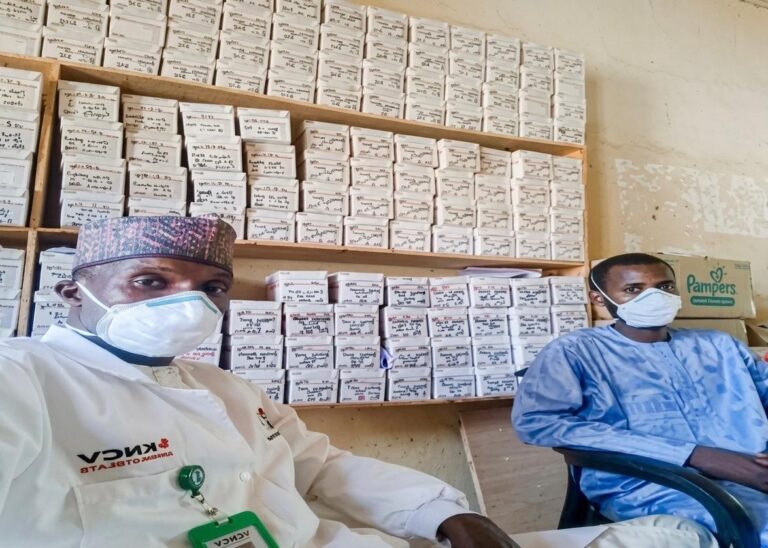
A turning point arrived thanks to the observant care of a regular customer. This customer, a tuberculosis (TB) survivor, noticed Imrana’s closed shop and went to check on him at home. Recognizing the symptoms from his own battle with the disease, the customer suspected Imrana might be suffering from TB. Acting quickly, the survivor took Imrana to General Hospital Ingawa. There, he connected Imrana with the healthcare workers and the KNCV Nigeria-supported team who had aided his own recovery.
After thorough screening and medical evaluation, Imrana received a diagnosis: spinal tuberculosis. He was immediately linked to care and began anti-TB treatment. Through consistent medical support, counseling, and strict adherence to his medication, Imrana began to heal. His strength slowly returned, and over time, his ability to walk improved significantly. Now, five months into his treatment, his condition has stabilized remarkably.
By mid-May 2026, Imrana achieved a milestone that once seemed impossible: he walked unassisted to the hospital to collect his bi-monthly medication. Even more encouragingly, he was able to reopen his communication center and gradually resume the business he loves.
Imrana’s journey from near immobility to regained independence underscores the dangers of self-medication and delayed diagnosis. Most importantly, it is a powerful testament to the impact of community awareness, survivor support, and timely access to quality TB care, proving that even extra-pulmonary TB can be successfully treated when caught and managed early.